Luxembourg

Luxembourg is the second richest nation on earth with the highest minimum wage in the EU, earning twice as much as Americans and having one of the lowest GDP debt ratios when measuring wealth.
Despite being one of the highest ranked for cost of living in the world, Luxembourg is the ranked fourth in the EU for the lowest petrol price and second in the world for diesel.
Bordered by Belgium, France and Germany the official languages are French, German and Luxembourgish.
For you wine connoisseurs, Luxembourg is home to the Chiggeri restaurant which has the largest wine list in the world with over 2,200 different wines.
Amazon’s European headquarters is amongst a number of corporations based in the city which includes Skype.
The city is one of the EU’s de facto capitals alongside Frankfurt, Brussels and Strasbourg,
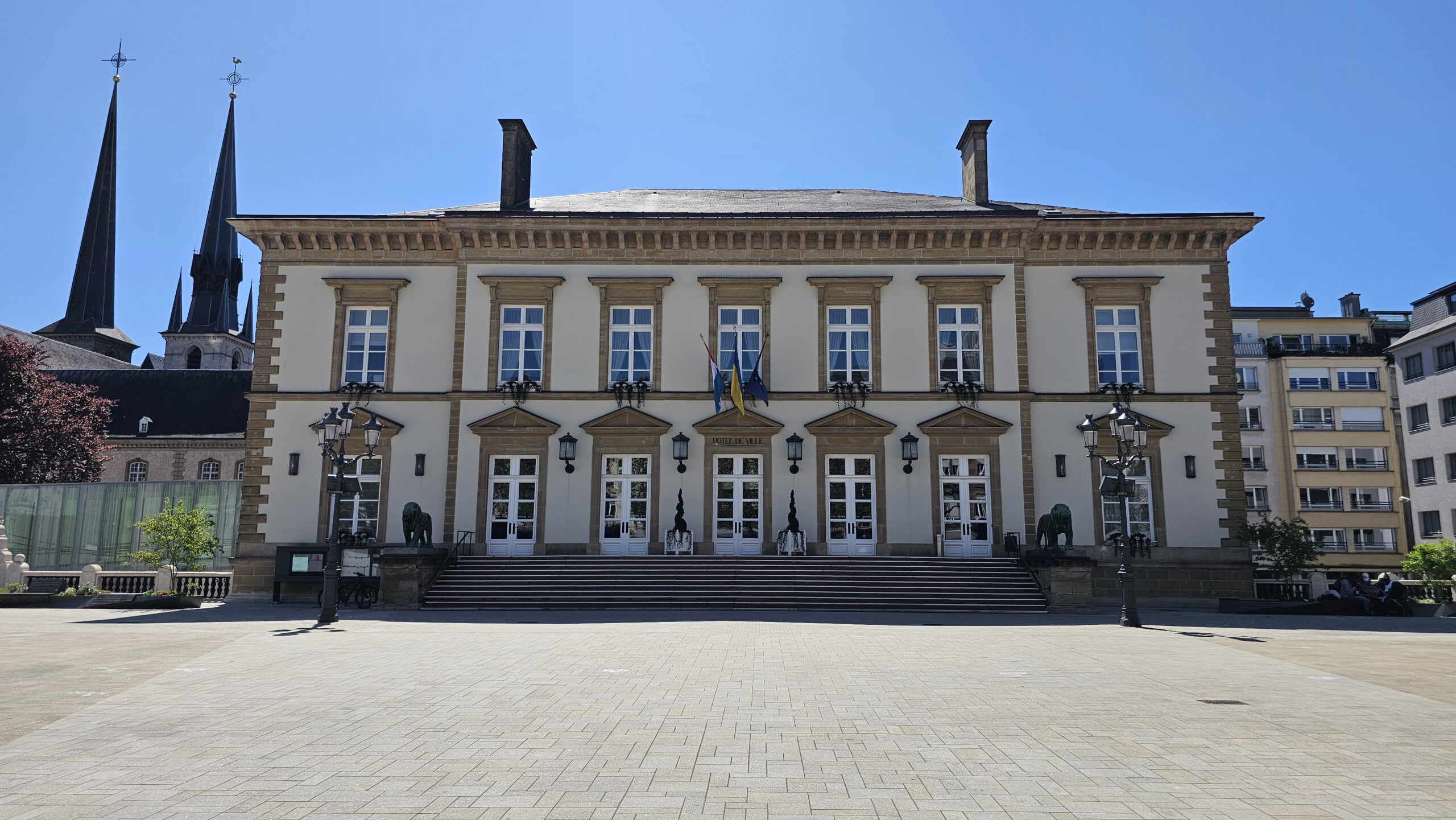
Hotel de Ville
Hotel de Ville is the home of Luxembourg City Hall.
Located on William Square, it was built between 1830 – 1838. Although the official unveiling was delayed until 1844.
During the German occupation in WWII, the German’s converted the basement market halls into offices.
Over time the building has undergone modifications including a noticeable inclusion of the two bronze lions which flank either side of the outdoor stairs in the 1930s.
Today Hotel de Ville is the seat of the city’s administration and hosts the municipal council, and the Mayor’s office.
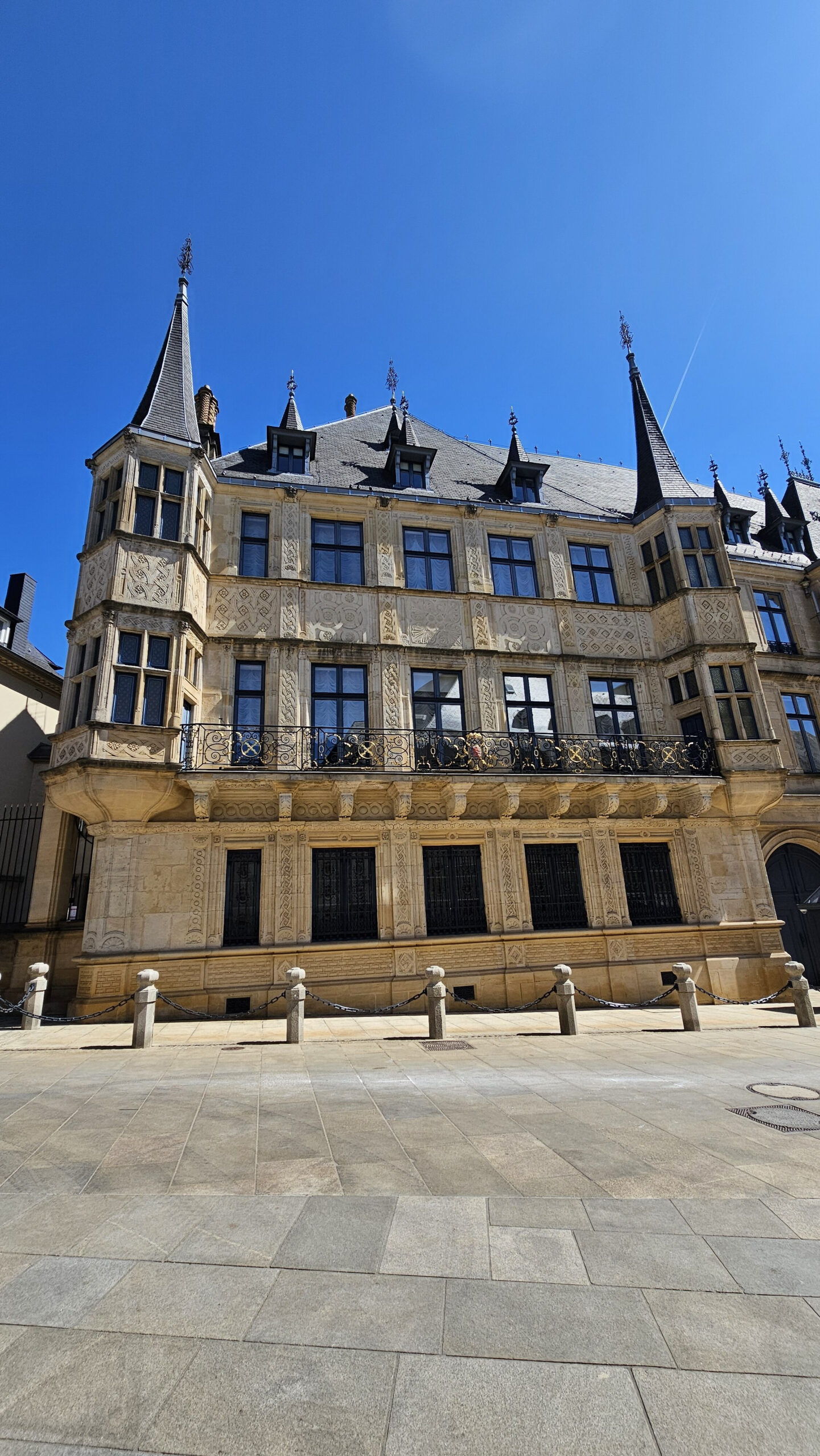
Grand Ducal Palace
The Grand Ducal Palace is home to the Grand Duke of Luxembourg where he performs the majority of his duties as head of state of the Grand Duchy.
Built as the city’s town hall in the 1570s, it was transformed into a royal palace in 1890. The original site was the location of the first town hall which was built in the early 1400s but was destroyed in a gunpowder explosion before being rebuilt in its current guise.
During WWII, the Nazis used the palace as a concert hall and a tavern, damaging its interior.
The interior was completely restored in the 1990s to meet modern standards and design.
During the summer months, you can take a 75 minute tour courtesy of the Luxembourg City Tourist Office where you can take a look behind the scenes, including the Grand Duke’s office.

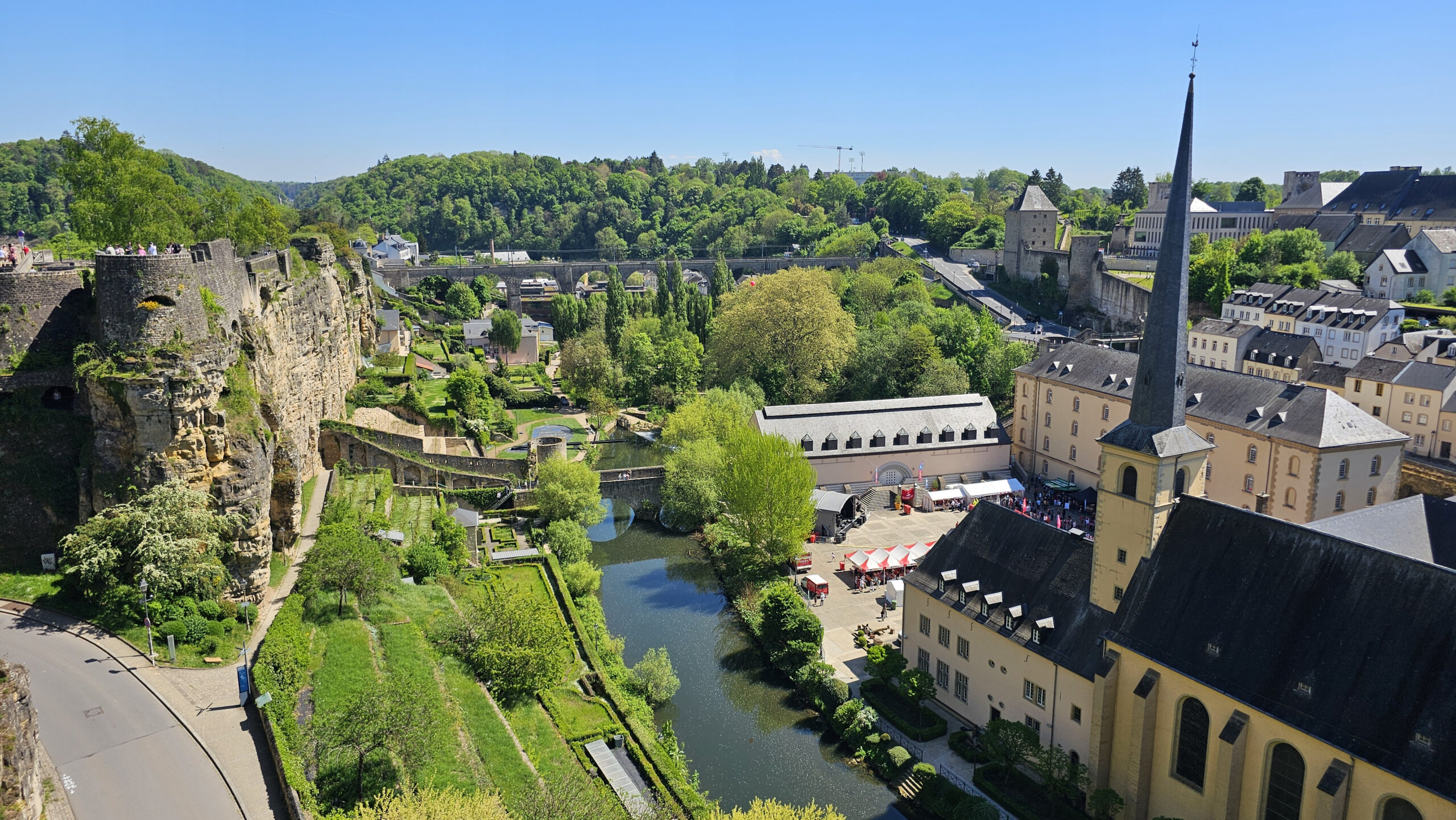
The Grund
The Grund is a district in the centre of Luxembourg City located in a valley below the city on the banks of the Alzette River.
It’s one of Luxembourg’s oldest neighbourhoods dating back to the 14th century. It was built over nine centuries before being demolished in 1867 as part of the Treaty of London.
I explored with the spare free day I had while waiting for the hours to tick along until the evening flight back home.
It’s essentially a village within a city. A chilled out part of the city. It’s accessible by foot, bus or public lift.
The Grund is a gem worth visiting. It was the busiest place I visited compared to the other places I visited in Luxembourg. I can’t imagine it makes much of a difference arriving earlier to beat the crowds.
Although I prefer early flights I’m not waiting around, sometimes you don’t get the option to choose. With evening flights it can be a pain trying to make everything work time wise with exploring, grabbing your luggage and getting to the airport.
Being here it didn’t feel like the day was dragging along. Everything was timed perfectly.


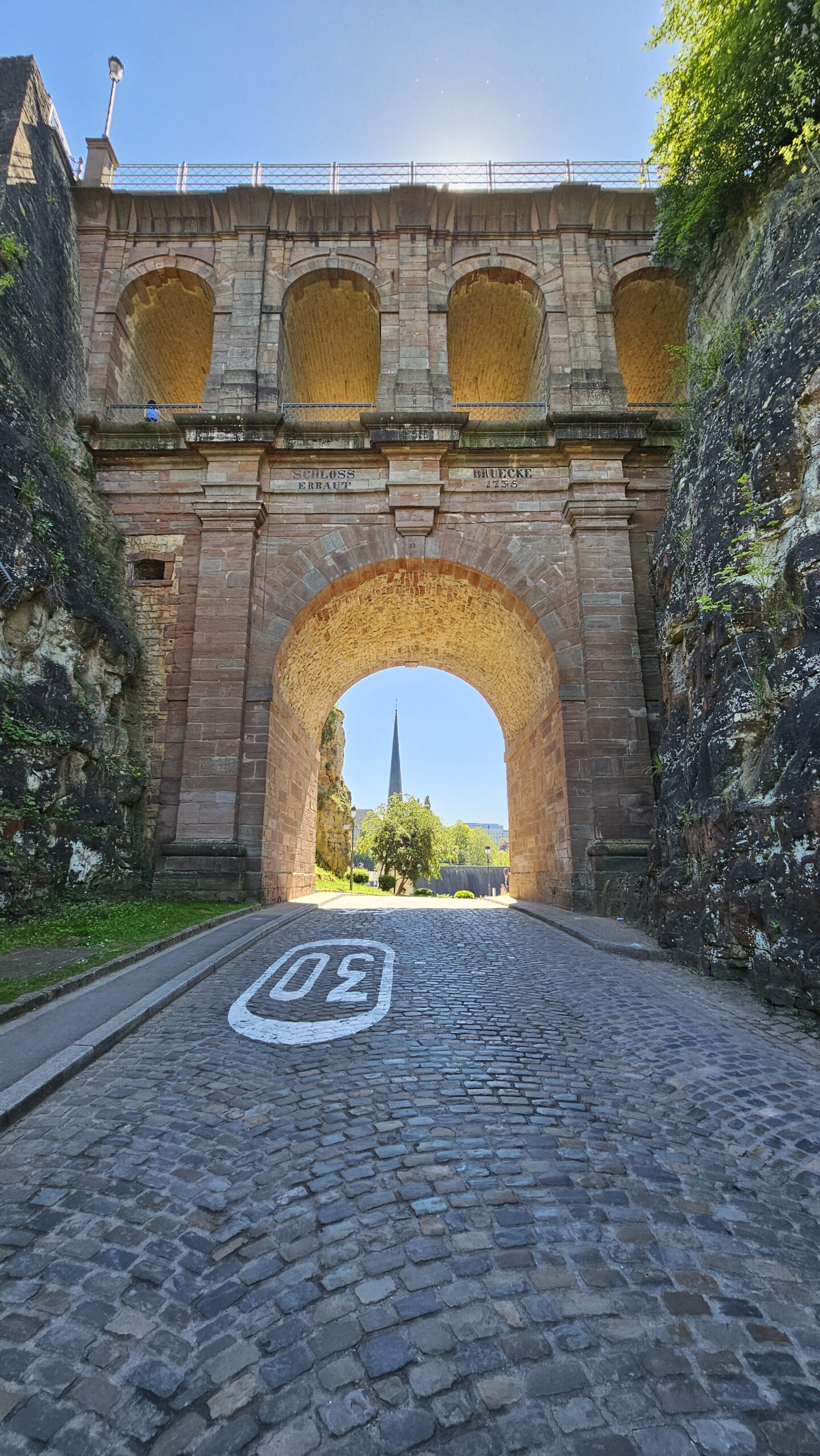

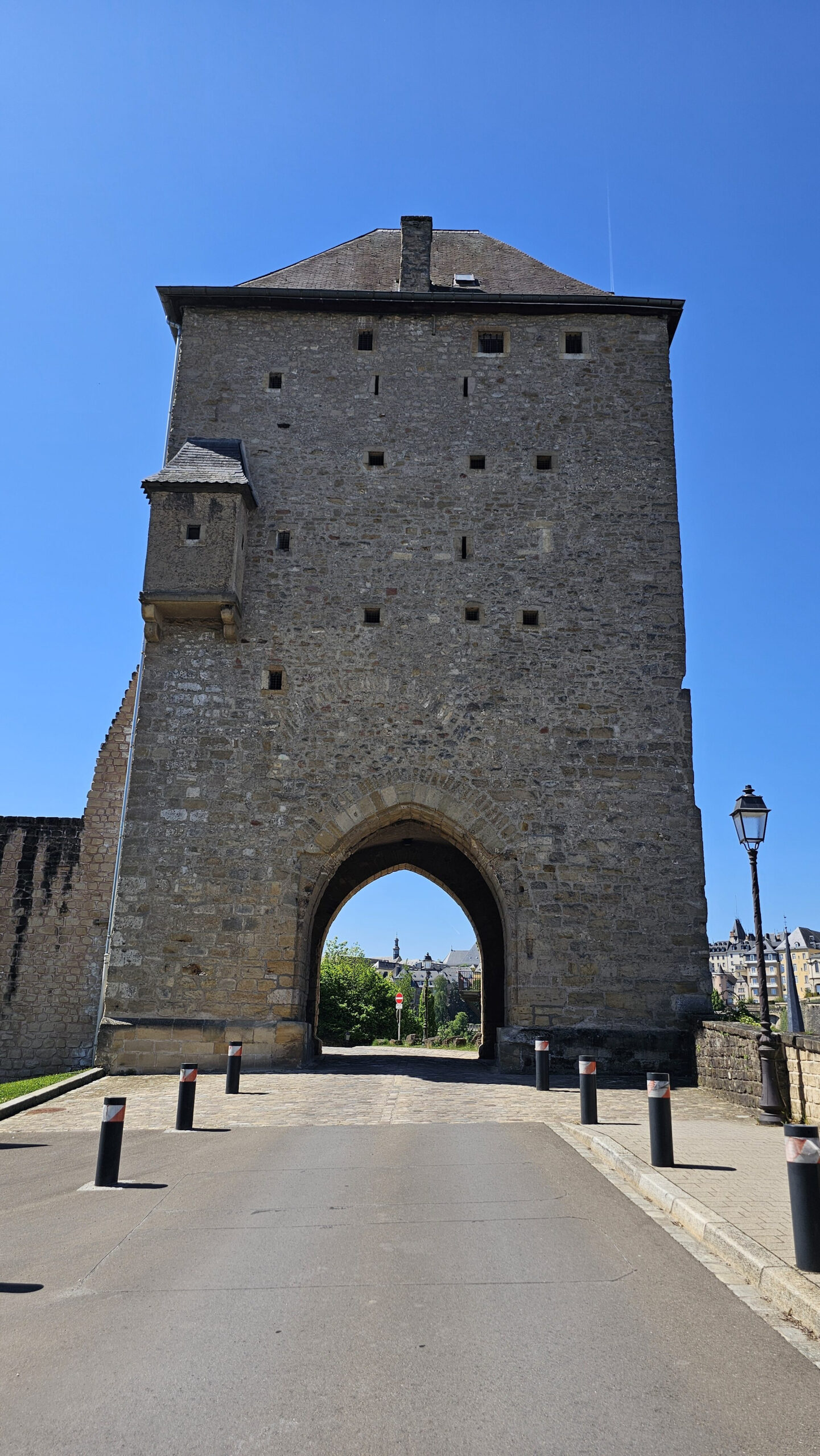
Fort Thungen
Fort Thungen is a historical fortification which was built in the 1730s by Austrians to strengthen the front of the fortress of Luxembourg, and was named after Austrian commander in chief Adam Sigmund von Thungen.
In 1836 the Prussians expanded Fort Thungen before strengthening it again in 1860.
The majority of the fort was demolished following the 1867 Treaty of London. Only the three towers and the underground foundations remained which were discovered in 1991.
It was rebuilt entirely in the 1990s and now houses a permanent exhibition where you can see the original documents on display behind the fortified walls.

Vianden Castle
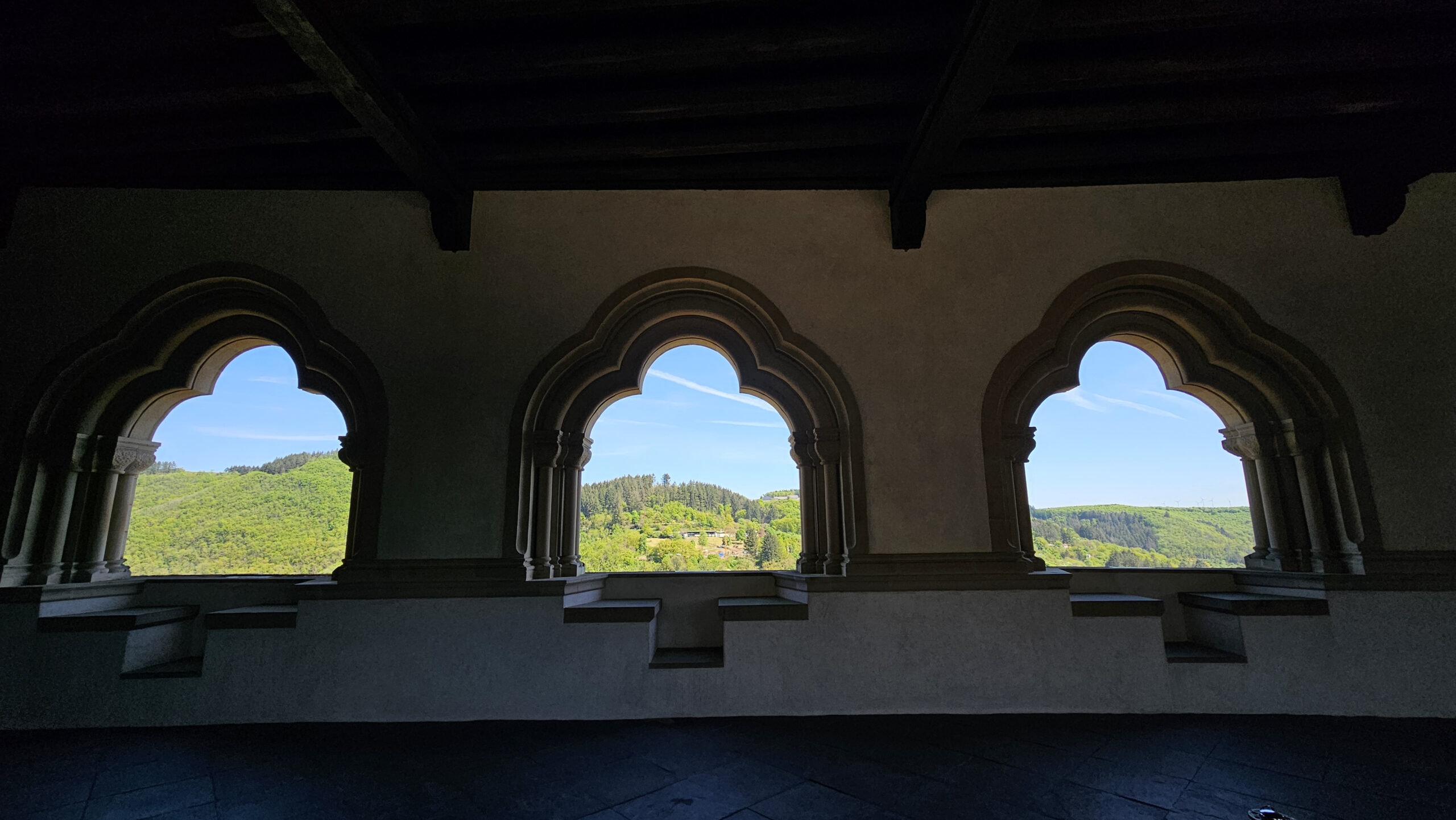
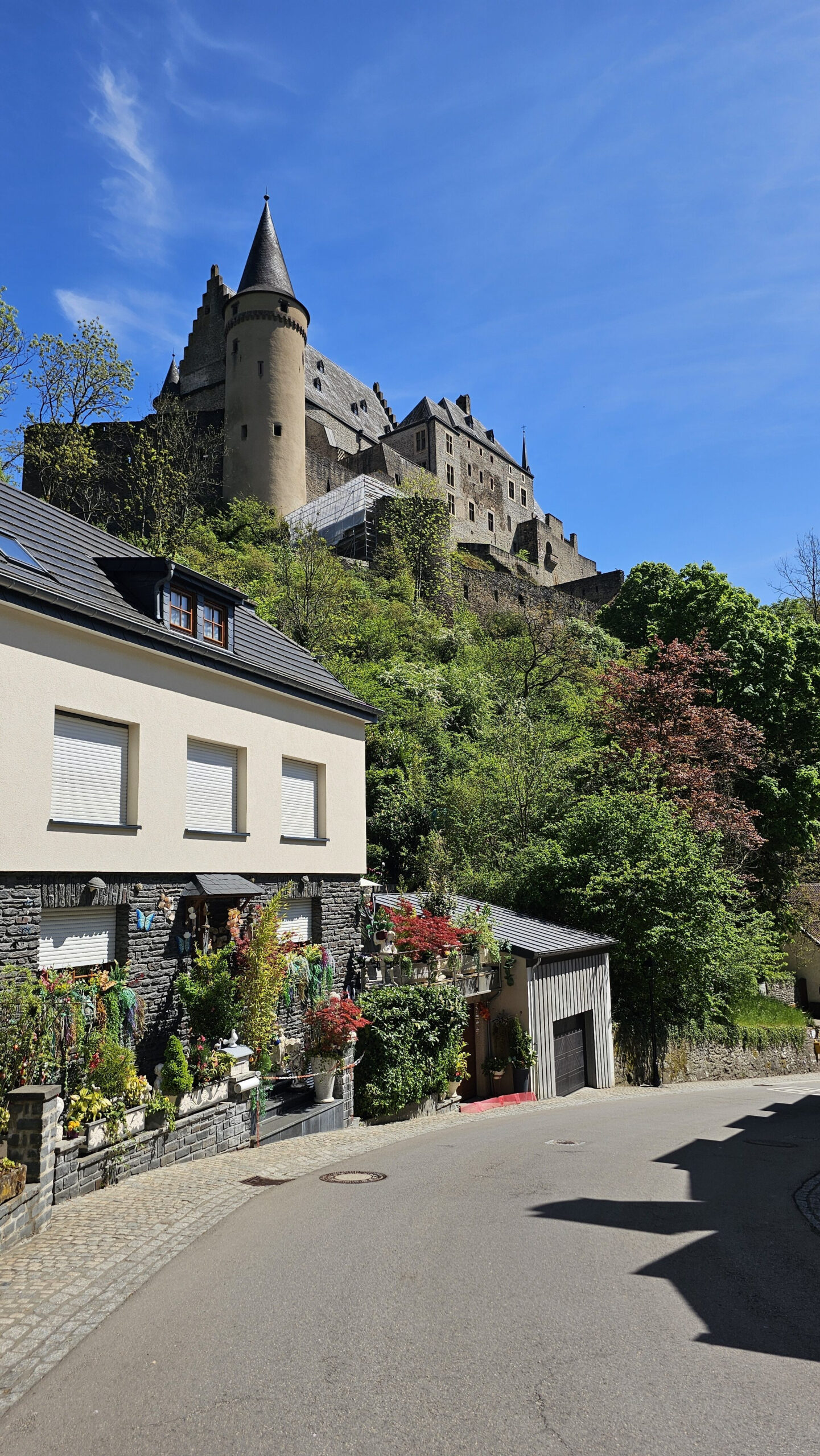
Vianden Castle is located in Vianden in the north of Luxembourg.
With origins dating back to the fourth century, Vianden Castle was built between the 11th and 14th century on the remains of a Roman fort and a Carolingian refuge.
For a long time the castle belonged to the Grand Ducal family before being passed into state ownership, where it was restored between 1977 and 1990.
Vianden was the last place in Luxembourg to be liberated in February 1945 after being the site of fierce fighting in 1944 during WWII.
To get to Vianden Castle you need to take a train and then a bus where the stop is located outside the station. If you plan it well you won’t wait long for the bus connection. Otherwise you’ll be waiting between 45 minutes to an hour like I did.
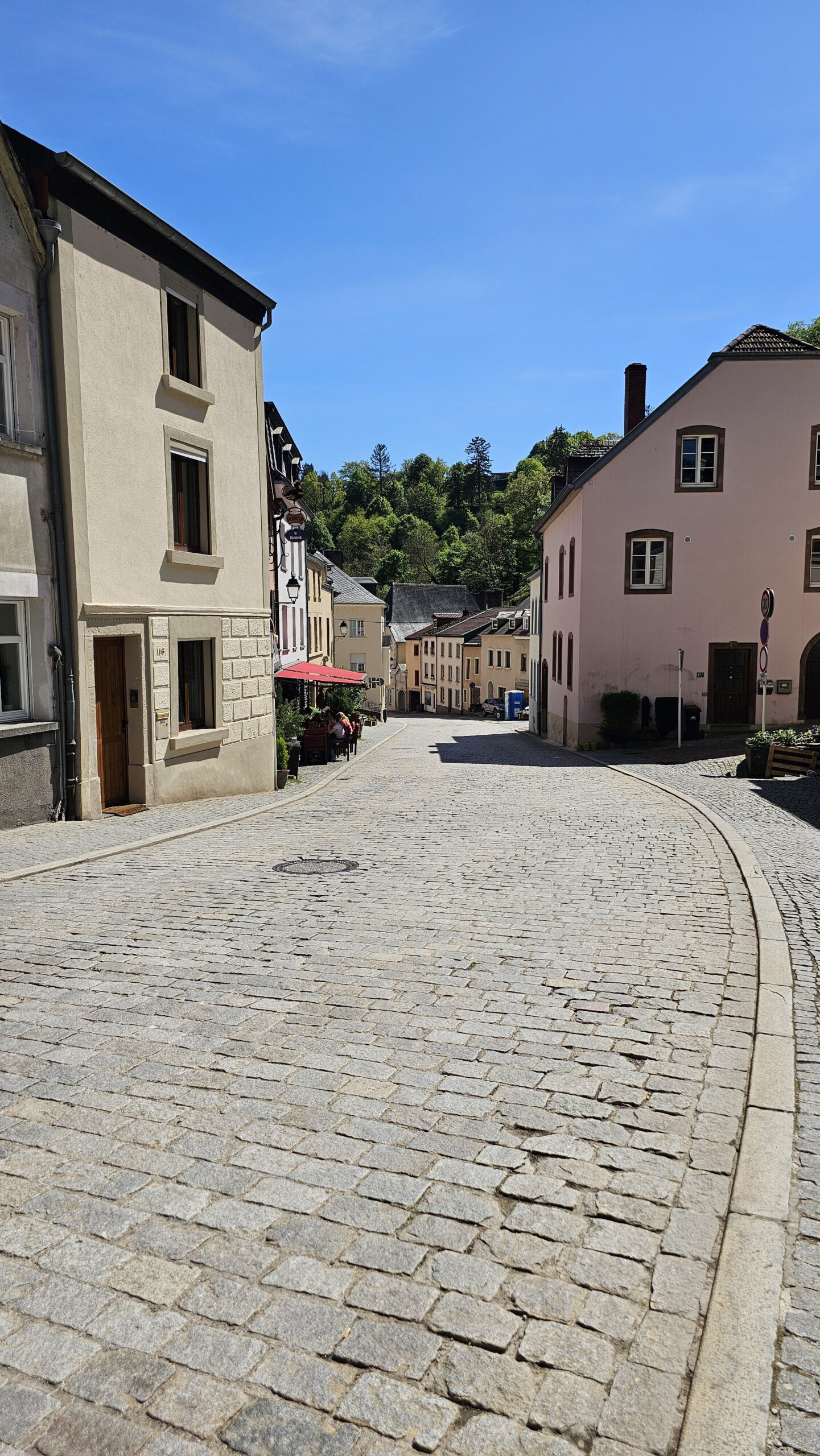
It’s a small unassuming place worth walking around once you’ve finished in the castle.

Luxembourg is good for a quick getaway.
Everything is compact. If you want to include a day trip, you need 3 days max, or 2 days if you’re just staying in Luxembourg City.
Compact places are ideal if you want to cover places on foot. The great thing about Luxembourg is if you don’t feel like walking, public transport is free. Hop on, hop off on trains, trams and buses as much as you like.
The one trade of with free public transport is Luxembourg is an expensive place. It was something I read about before coming so it’s not like I was caught off guard. So don’t be shocked when you go out for food or go to bar when you look at the menu.
With extreme day trips becoming a thing, you could do one here and cover the majority of sightseeing in Luxembourg if flight times aligned.