Albania
Albania is on the South East of the Balkan Peninsula, and has over 750,000 concrete bunkers which were built during the communist era to defend against potential invasions that never came. Some are still around rebuilt as cafes, storage units and more.
There isn’t a single McDonalds restaurant in Albania. Instead there are locally owned burger joints and traditional cafes serving their own take on fast food.
On the subject of cafes, Albania has a massive coffee culture which has an Italian influence. Albanians drink more coffee per capita than Brits drink tea.
It’s an ideal country to base yourself if you’re looking to explore the Balkans. Albania borders Montenegro, Kosovo, North Macedonia and Greece.
I made use of this as I took the bus from Budva in Montenegro to Tirana. As someone who lives in the UK, it’s cool to not rely on flying to reach another country as we need to most of the time.
It was the hottest bus ride ever. Bring water because trying to sleep or waking up in a sweat on a hot bus is not fun.
Tirana
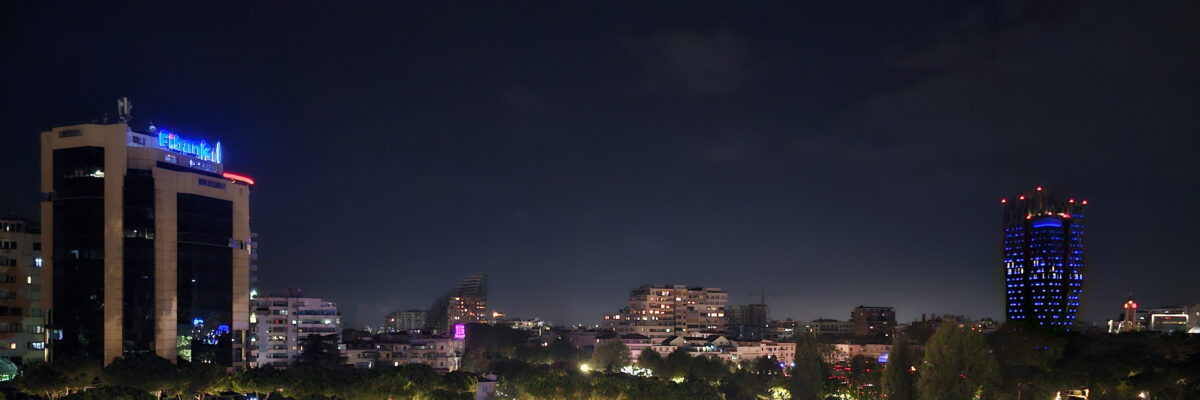
Speaking of Tirana, it’s been Albania’s capital since 1920 and known for its colourful Ottoman, Fascist and Soviet era architecture. With over 300 sunny days a year, Tirana is one of Europe’s sunniest capitals.
It’s an ideal size to do a walking tour. I prefer to do these in smaller cities because you cover the majority of the area, as opposed to a big city like Paris where it feels more limiting.
Starting from Skanderberg Square we covered some great places, the highlight of the tour was hearing the tour guide about what his parents went through during the communist regime under Enver Hoxha (pronounced Ho-xha).
Hoxha was in power from 1941 until his death in 1985. It was hard hearing what Albanians went through with the strict rules and punishments they endured, and being under the supervision of the Sigurimi (secret police).
You could tell it was hard for our tour guide to talk about it being so close to home as he read out a letter he wrote to his parents after finding out the full extent of what they dealt with until the collapse of the communist regime in 1991.
He even apologised at one point for how morbid and depressing it was, and sure it was but it’s important for us to learn from history to not repeat it. I spoke to him afterwards, not to only thank him for the tour but to tell him there wasn’t a need to apologise for telling his family’s story.
There were talks of turning Hoxha’s house into a museum but there were push backs with those arguing that it glorifies his history, while others on the flip side said it’s another way to tell the story of an important part of Albania’s history. I can understand both sides of the coin and why it’s a delicate subject.
One of the more unique buildings in Tirana is the Piramida. It opened in 1988 and is a former museum dedicated to Enver Hoxha. Since the collapse of communism, it’s been a fair centre, theatre, cultural centre, bar and television studio. It was once a NATO base in 1999 during the Kosovo war.
In the years that followed, the Piramida was left neglected. There were debates on whether to destroy it as a member of those persecuted by Hoxha’s regime called it a symbol of communism that should be demolished.
Today the Piramida is more modern with many small colorful boxes scattered around, becoming an entertainment space for the community. It’s used for conferences, studio workshops, entertainment centre, bars, and restaurants. The stairs allow the public to stand on the symbol of the dictator and look at the city in a different perspective. At the top of the pyramid is platform with a panoramic of the city.

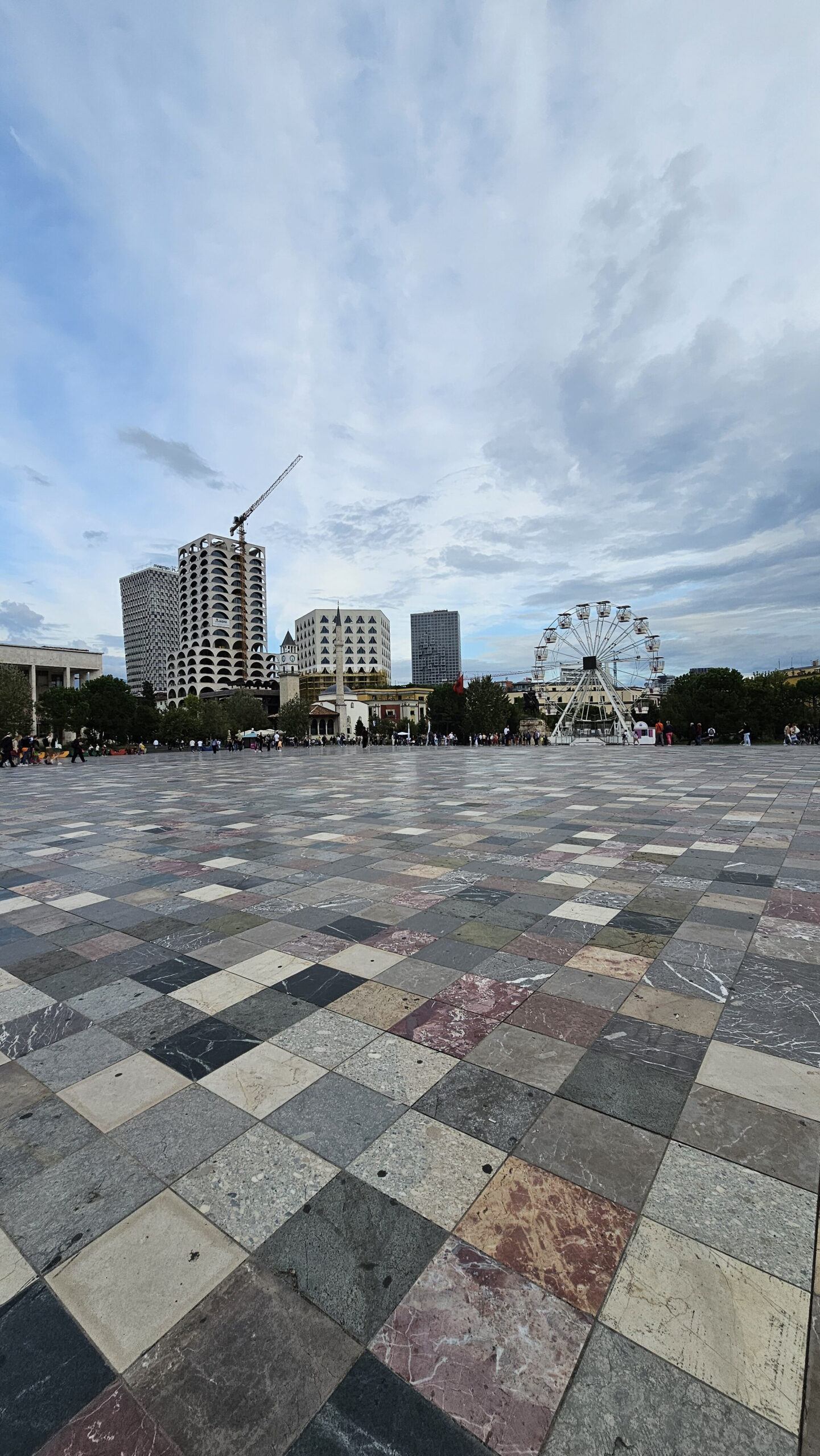


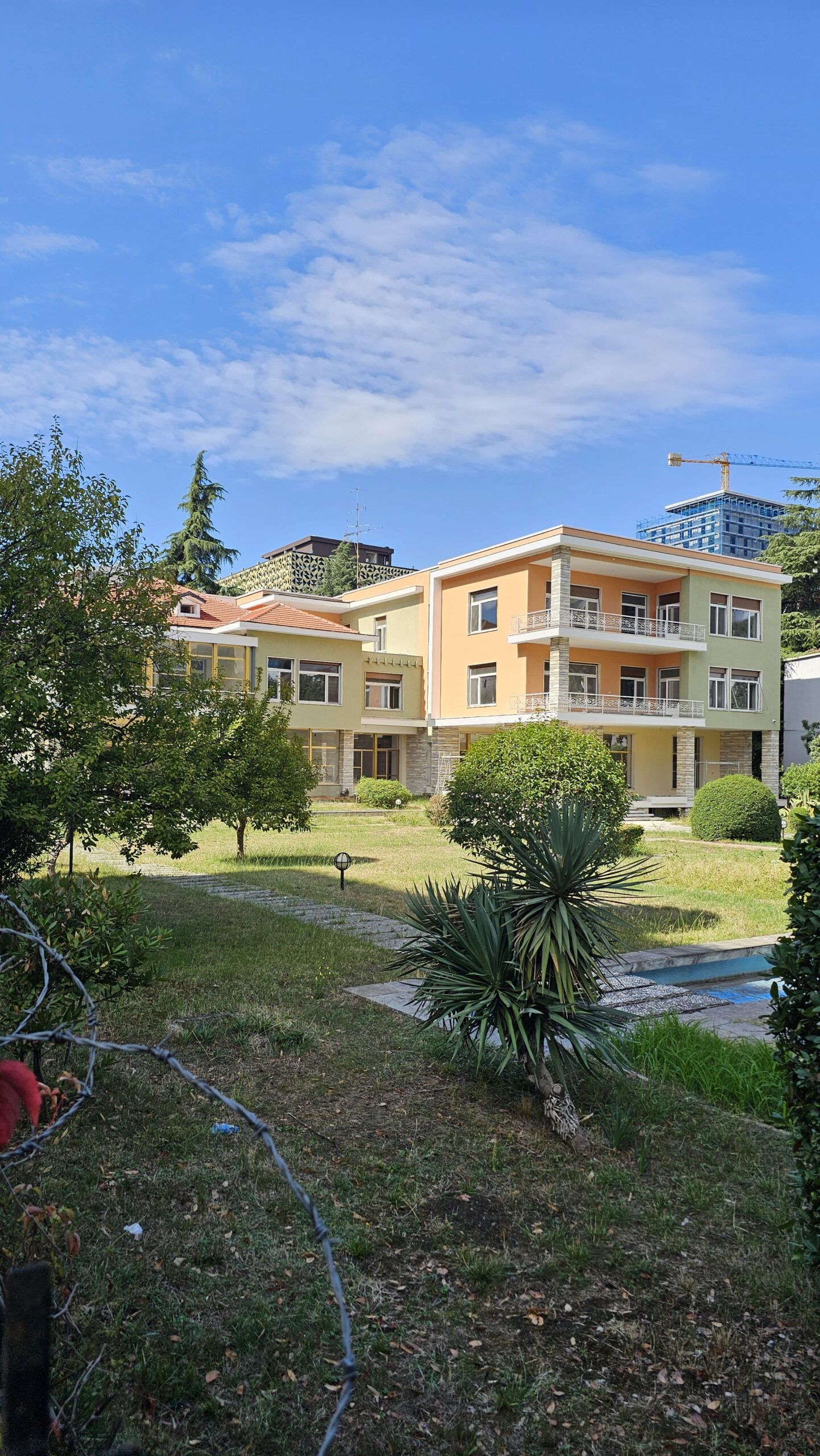
The House of Leaves is a museum of secret surveillance previously used by the Sigurimi. The museum has been open to the public since 2017.
I’ve always been fascinated by these kind of museums. I went to a former KGB headquarters in Riga, the spy museum in Berlin and the Gestapo museum in Berlin. Sometimes that fascination can disappear for a minute when the realisation of what went on in these places dawns on us.
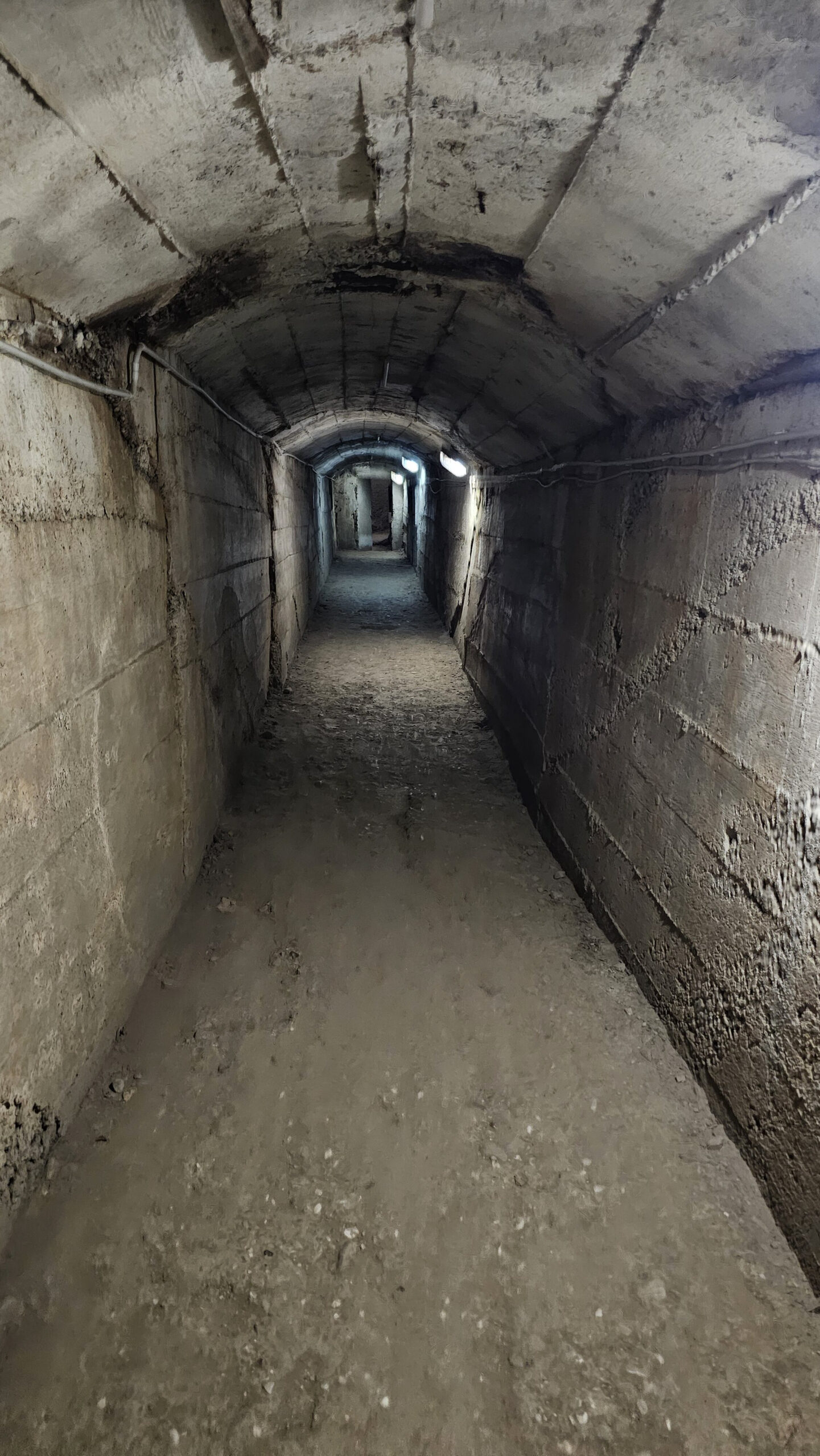
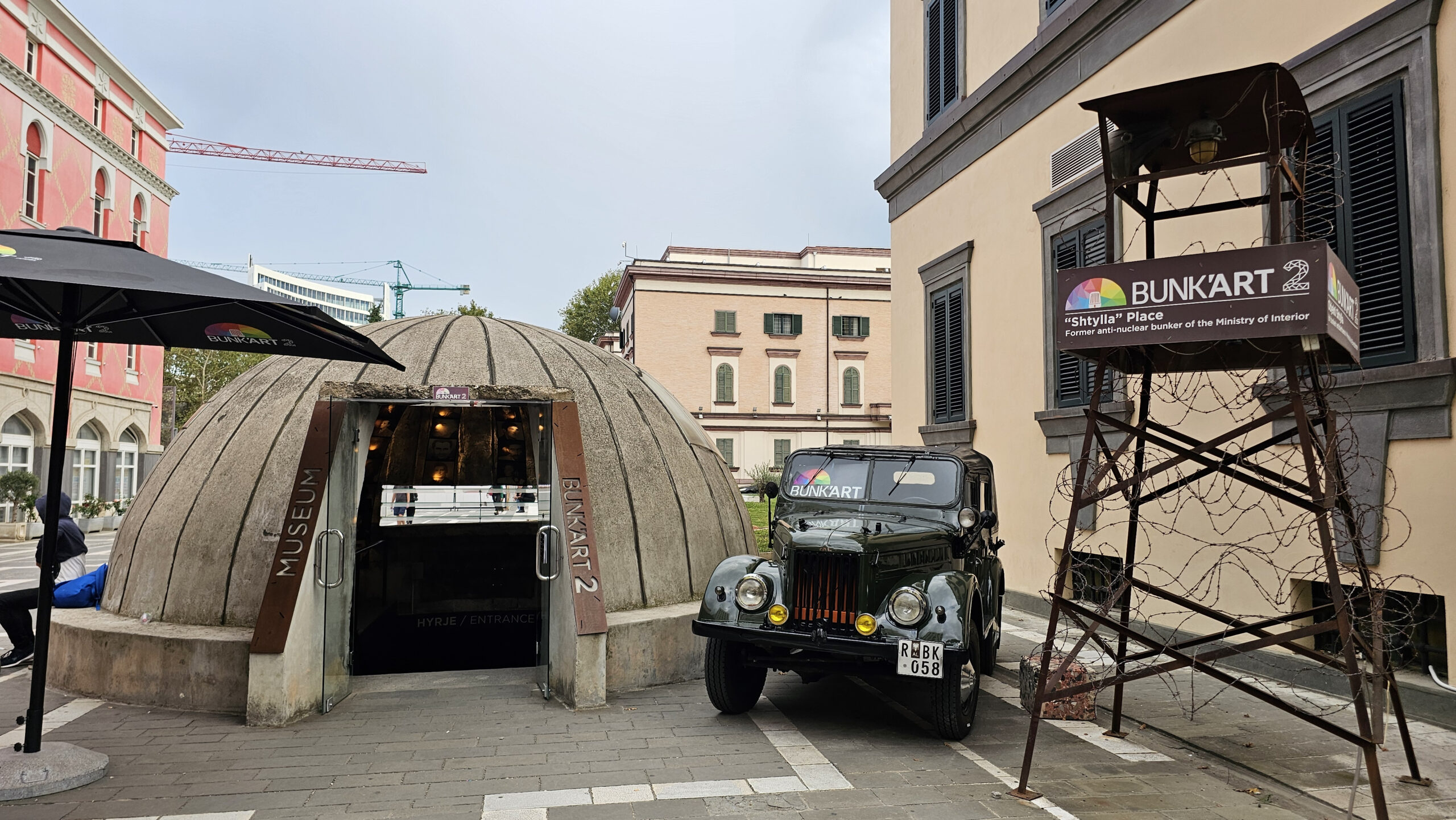
Another museum worth visiting is Bunk’Art 2, a nuclear pit bunker from the communist era showing the history of Albania’s Ministry of Internal Affairs from 1912 – 1991 and how the Sigurimi operated.
Bunk’Art 2 is the second phase of the historical cultural project of displaying Albania’s communist regime. There’s Bunk’Art 1 which is dedicated to Albania’s communist army and the lives of the Albanian people during the regime.
I had limited time and lots of places to choose from, I asked our tour guide for advice on which one of the Bunk’Arts to visit and was advised to choose number 2 if I could only visit one.
The Sky Club is the best place for a cocktail with a view of Tirana and the mountains. It comes with the novelty of having a rotating bar. Built in 2001, it was one of the tallest buildings in Tirana and home to Albania’s first rotating bar. In 2023 the building was transformed into the largest rotating bar in the Balkans.
Tirana is a fun city to visit over a weekend. I could understand why people would spend more time here. There’s so much history to be explored and the food scene is pretty good.
One place I didn’t have the chance to visit is Mount Dajti. It’s accessible via the Dajti Ekspres cable car (take a bus from Tirana). It’s the longest cable car in the Balkans. You get the best views of Tirana, the surrounding mountains, and on clear days you can see the coast



Berat
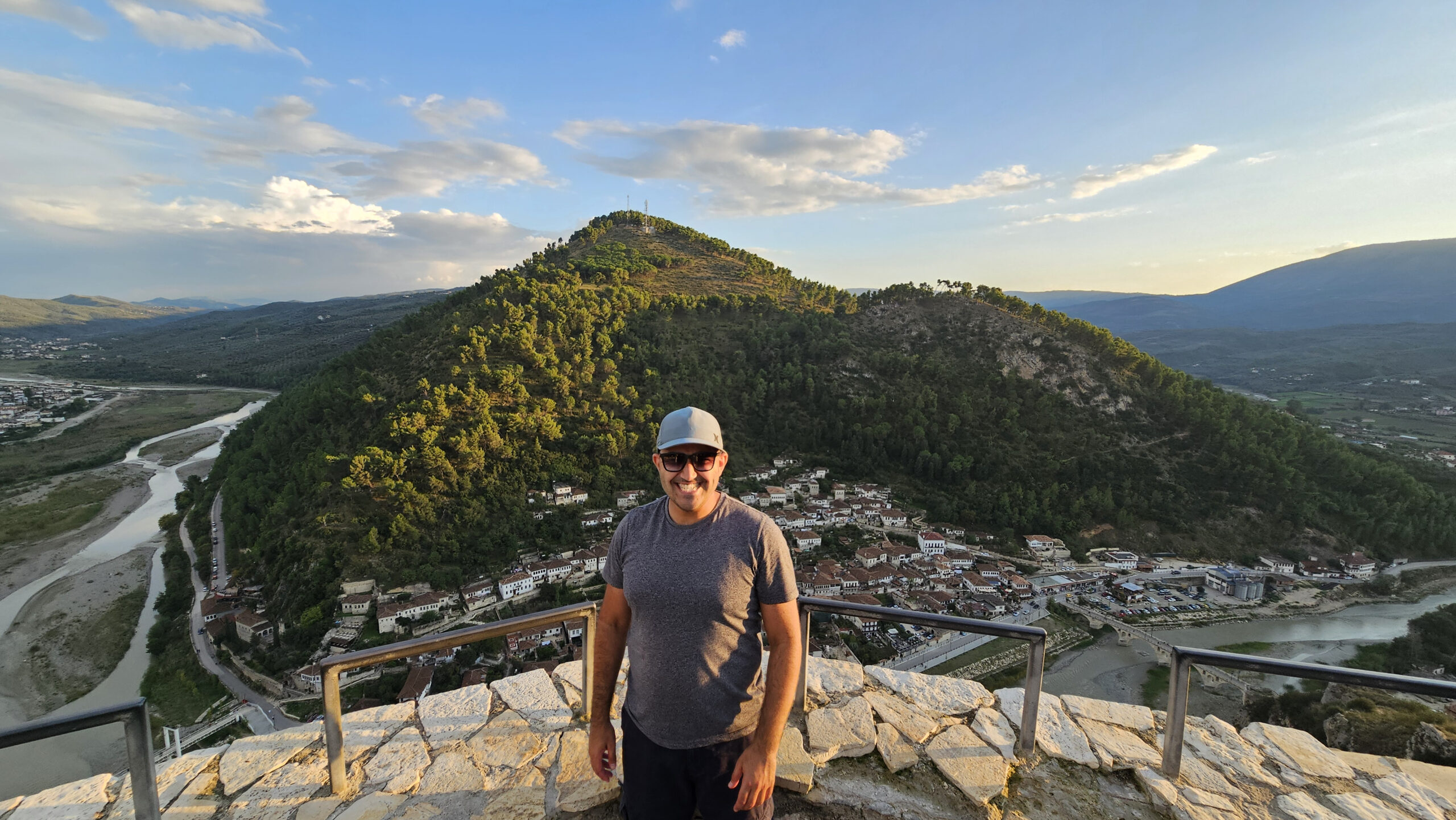
Berat is a small city on the Osum River in central Albania. It’s known as the city of a thousand windows and its white Ottoman houses.
To walk the main area of the town, taking photos of the buildings and windows with the hill top in the background, and explore the area takes around 90 minutes if that.
You’ll spend the main portion of the day at Berat Castle which over looks the the town. You can’t miss it with the Albanian flag proudly perched high above the Castle.
You need to walk up a hill to get there. It takes about 15 – 20 minutes, and the incline isn’t as bad as it looks. Berat Castle dates back to the 4th century BC although most of the current structure was built in the 13th century.
It’s one of the few castles in Europe still inhabited today with around 100 families living within the castle walls. It’s a living community with bars, shops and churches (at one point there were 20 Churches, not all survived but some are well preserved). Entry costs 200 Lek between 9 am – 6pm (less than £2.00) and free outside of these hours (There was no one in the kiosks when we went).
The walls are nearly a mile long offering numerous photo opportunities and views of Berat, the Osum River, Mount Tomorr and the entire valley.
Restaurants and bars line the main street by the bridges. You can have a good meal and drinks at a reasonable cost.
I loved Berat! What a beautiful, unassuming little place. One full day is enough to enjoy the best Berat has to offer.
Even the accommodation I stayed at has a story behind it. The Vista Boutique Hotel use to be a safe house for Albanian people hiding from the fascists during World War 2 and its been in the same family for over 200 years.



Sarande
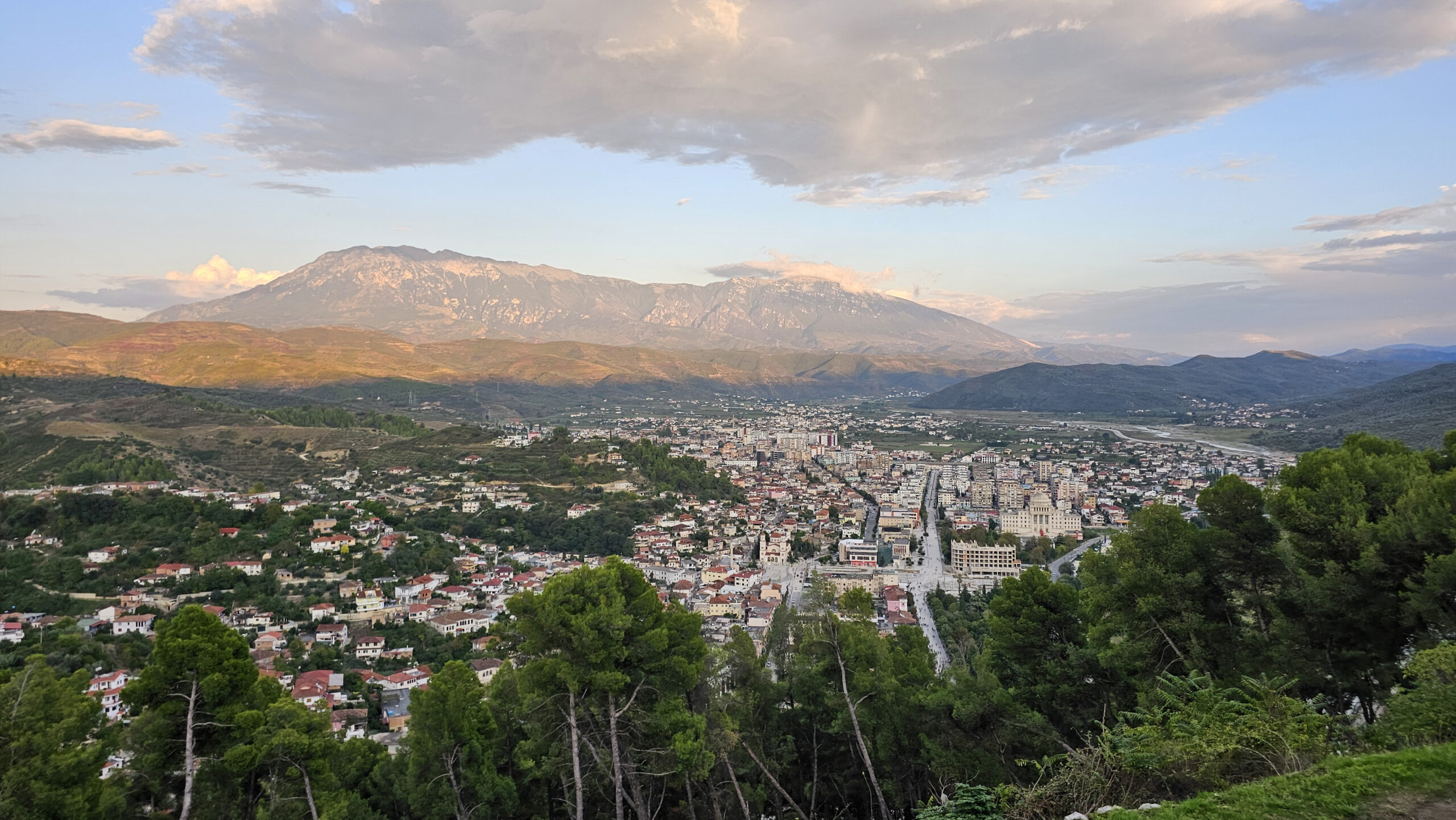
Sarande (or Saranda) is a seaside resort in the south of Albania known as the unofficial capital of the Albanian Riviera.
The municipality of Sarande has a population of 55,000, this multiplies by 3 or 4 times every summer as the sleepy region becomes a vibrant city when tourists, and seasonal workers arrive. The area has experienced growth in tourism and popularity amongst expats and retirees.
As I was celebrating my Birthday here, I decided on a half day boat tour around the Riviera.
It covered anything you imagine on your typical boat tour. We went to a cave, stopped several times for a swim and relaxed at a secluded beach for a couple of hours. The temperature of the sea was as good as you could wish it.
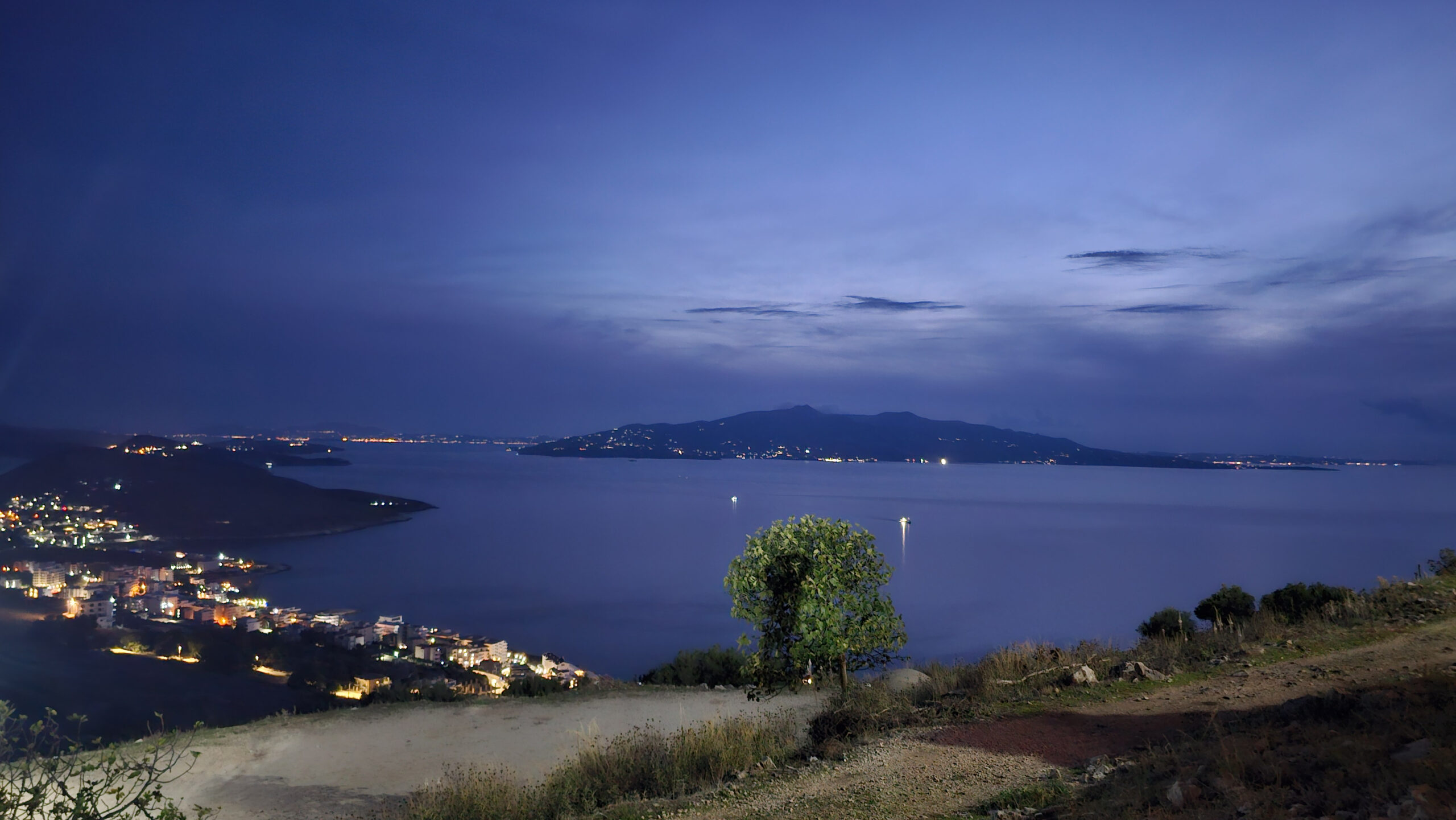
For the best view of Sarande, head to 10 minutes out of the centre to Lekursi Castle. It was built in 1537 and use to inhabit the village of Lëkurës
You get a panoramic view of the Ionian Sea. Inside the walls is a restaurant making it an ideal spot for a sunset dinner. Even if you’re not visiting the restaurant, you can visit the Castle for free.


A trip to the Albanian Riviera isn’t complete without visiting the Blue Eye, a natural water spring in the village of Muzinë in the Finiq municipality which is around 40 minutes from Saranda.
After parking up, you can take a train or walk 10 – 15 minutes. The water is so clear you can see a depth of more than 50m. I met people during the trip who jumped in and said it was freezing. You’re not suppose to swim here but people do so anyway. Apparently it’s even frowned upon.
As much of a good time I had in Sarande, if I was to come back to the area, I’d stay in Ksamil just to try another part of the region.
2 nights here is enough unless you’re doing day trips to other parts of the Albanian Riviera.
A big plus for coming here is the ease of getting a 30 minute ferry to Corfu. If you don’t have a car rental, people come here via Corfu Airport and get a ferry transfer.


There’s more to explore with Ksamil and Gjirokaster, which more resembles Berat than Saranda and Ksamil.
I loved Albania, it’s cheap and people are welcoming. Don’t listen to any bullshit stereotyping of Albanians.
Remember to bring cash to take to a currency exchange, You can’t get Albanian Lek outside of Albania and most places you visit only take cash. You can pay in Euros but you get better value paying in Lek.
Some places do take card payments but always ask beforehand. The tour guide we had on our walking tour in Tirana said ATM machines will charge a lot if you want to withdraw cash.
If you keep the receipt from the money you exchange, you can use it to exchange any remaining Lek you have at the end of your visit.
If you’re looking to explore the country, hire a car. Public transport hasn’t caught up with the majority of Europe.
You need to be an assertive, confident driver if you’re driving in Albania. Regardless of what other drivers do, you must stick to the speed limit even if other drivers are overtaking and driving faster without hesitation. There are random check points and the police will pull you up and fine you.
The roads aren’t as bad as suggested online. Of course when you reach smaller cities/towns some roads need maintenance, but nothing to get your knickers in a twist over.
If you’re only visiting Tirana, you won’t need a car. Taxis and public transport are well connected around the city and the airport.